
Custom vs Semi-Custom vs Stock Cabinets: What's the Real Difference?
Stock, semi-custom and custom cabinets can look similar in a showroom but are built very differently. Here is what each really means, what you get for the money, and how to tell which one a quote is offering.
Written by the Panda Reno design and workshop team: custom cabinet makers designing, building and installing across the Greater Toronto Area.
Walk into three cabinet showrooms in the GTA and you may hear the word "custom" in all three, even though they are selling very different products. Cabinetry is broadly sold in three tiers: stock, semi-custom and fully custom. The differences are not just price. They affect how well the cabinets fit your room, what they are made of, how long they take and how long they last.
We build fully custom cabinetry, so we are not neutral, but we will be straightforward: each tier has a place. This guide explains what each one actually means, where it makes sense, and the questions to ask so you know exactly what a quote includes.
The three tiers at a glance
Here is the quick comparison. The details below explain why each row matters.
| Stock | Semi-custom | Fully custom | |
|---|---|---|---|
| Sizes | Fixed widths, usually 3-inch steps | Standard sizes with some modifications | Any size, built to your room |
| Materials | Mostly particleboard and laminate or thermofoil | Wider choice, often better boxes | Your choice: solid wood, veneer, painted MDF, plywood |
| Finishes | A short standard list | A longer manufacturer list | Any colour, stain, oil or lacquer |
| Fit | Gaps closed with fillers | Fewer fillers, still standard boxes | Scribed to walls, floors and ceilings |
| Lead time | Days to a few weeks | Often 4–10 weeks | Commonly 8–12 weeks from approved drawings |
| Best for | Rentals, flips, utility spaces | Standard rooms on a defined budget | Long-term homes, unusual spaces, design-led rooms |
What stock cabinets are
Stock cabinets are mass-produced in a fixed range of sizes and finishes and are often available off the shelf or within a few weeks. Big-box stores and flat-pack brands sell stock cabinetry. Boxes are usually particleboard with a melamine interior, and doors are often thermofoil, laminate or a basic painted finish.
Stock has real advantages: it is the lowest upfront cost, it is quick to get, and for a rental unit, a basement laundry or a garage it can be perfectly sensible. The limitations show up in rooms that are not a neat multiple of three inches, in heavy daily use, and anywhere you want details like integrated appliances or furniture-style panels.
What semi-custom really means
Semi-custom cabinets start as standard boxes from a manufacturer's catalogue but allow modifications: changing a width or depth, adding a finished end panel, choosing from a wider range of door styles and finishes. Many kitchens sold as "custom" in showrooms are actually semi-custom lines with options added.
Semi-custom can be a good middle ground for a fairly standard room where you want more choice than stock. You are still working within the manufacturer's system, though, so odd dimensions, sloped ceilings, bulkheads and very specific design ideas will still be solved with fillers and compromises rather than built around.
What fully custom means
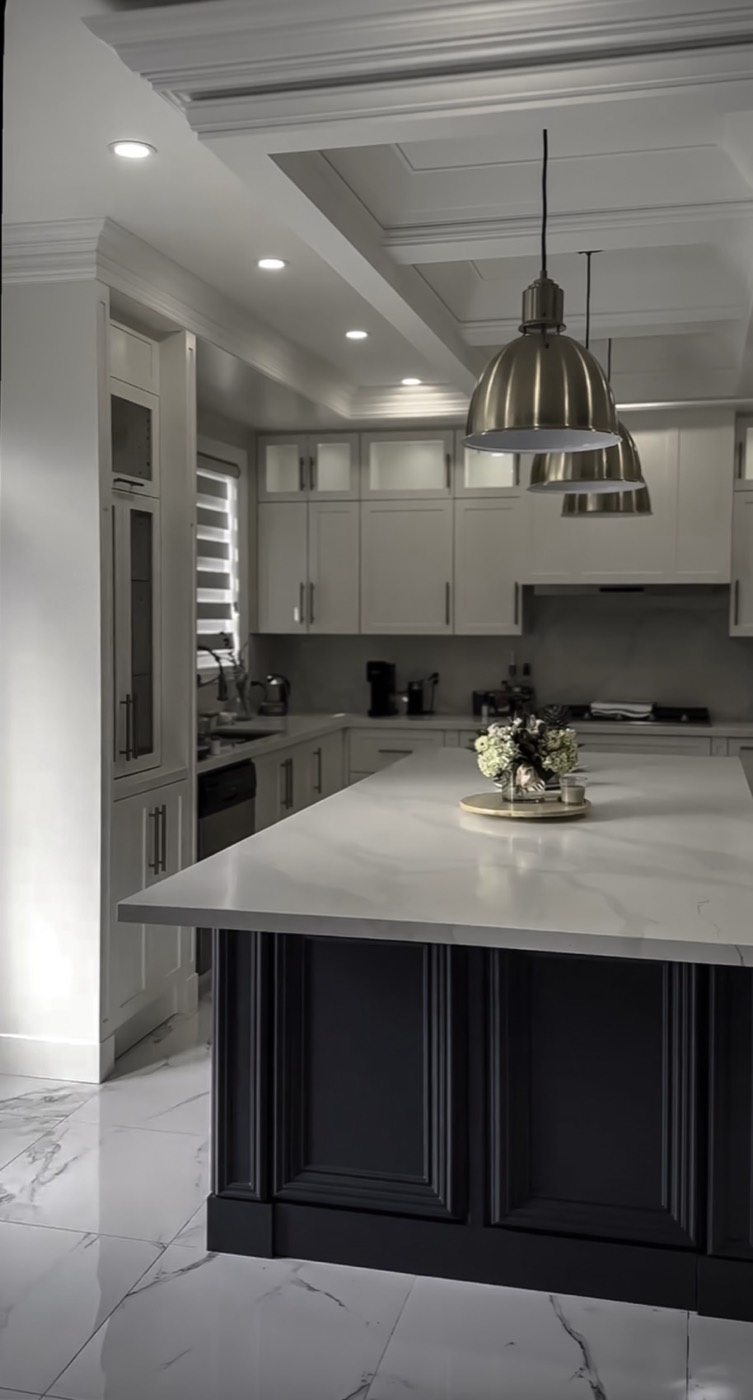
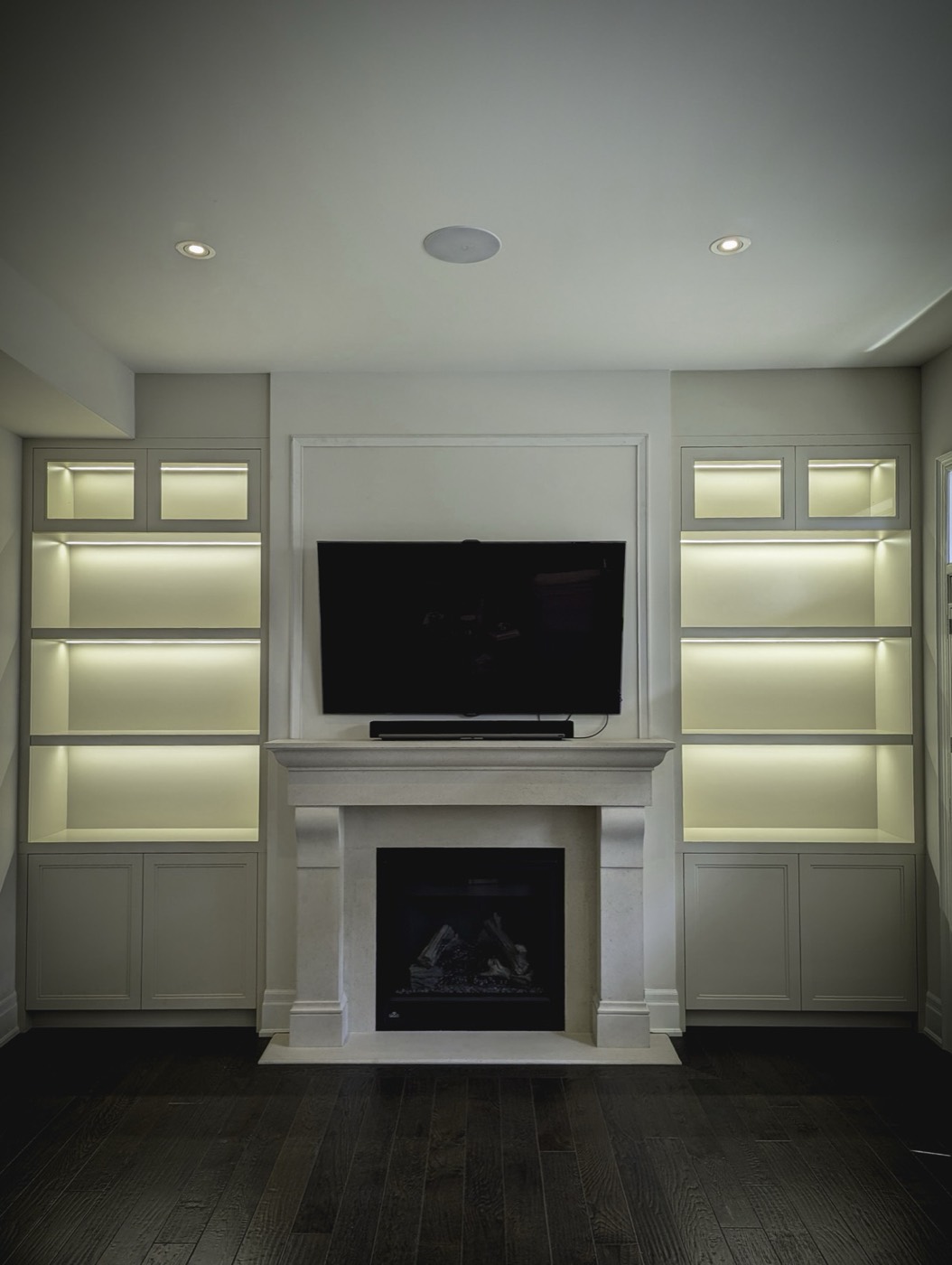
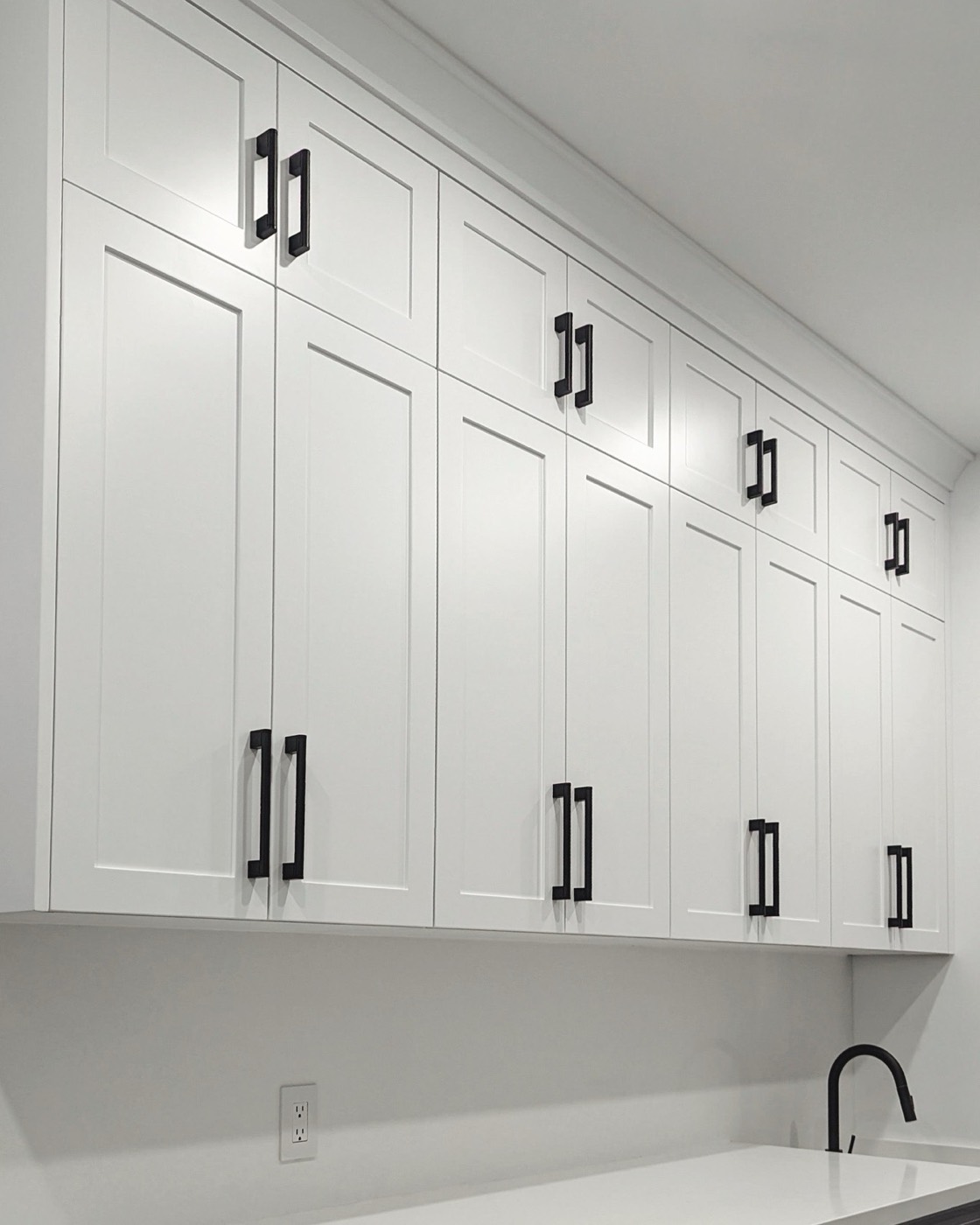
Fully custom cabinetry is designed for your specific room and built to order, without a catalogue of box sizes behind it. If a wall is 137 inches long, the cabinetry is designed for 137 inches. If the ceiling drops for a duct, the uppers step around it. Materials, finishes, door styles and hardware are chosen for the project rather than picked from a list.
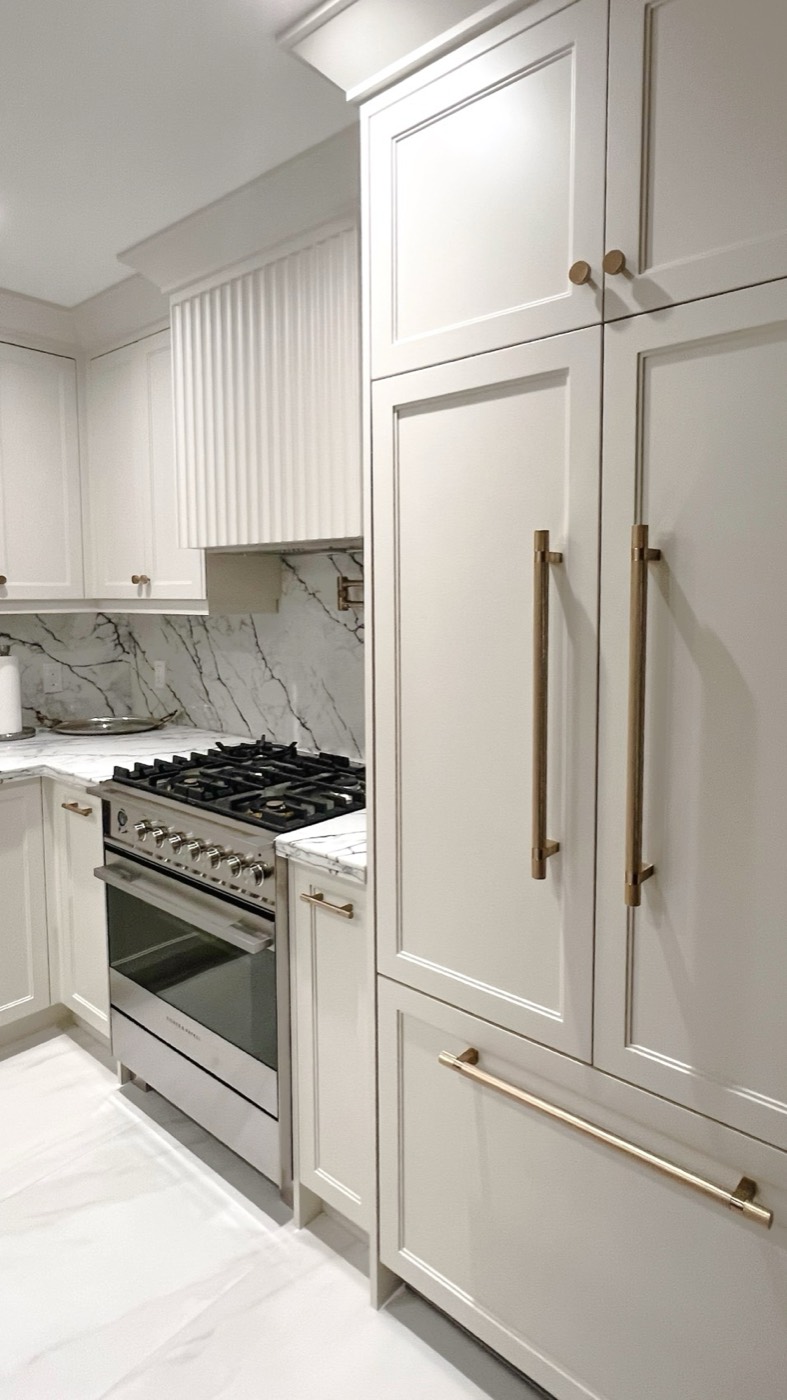
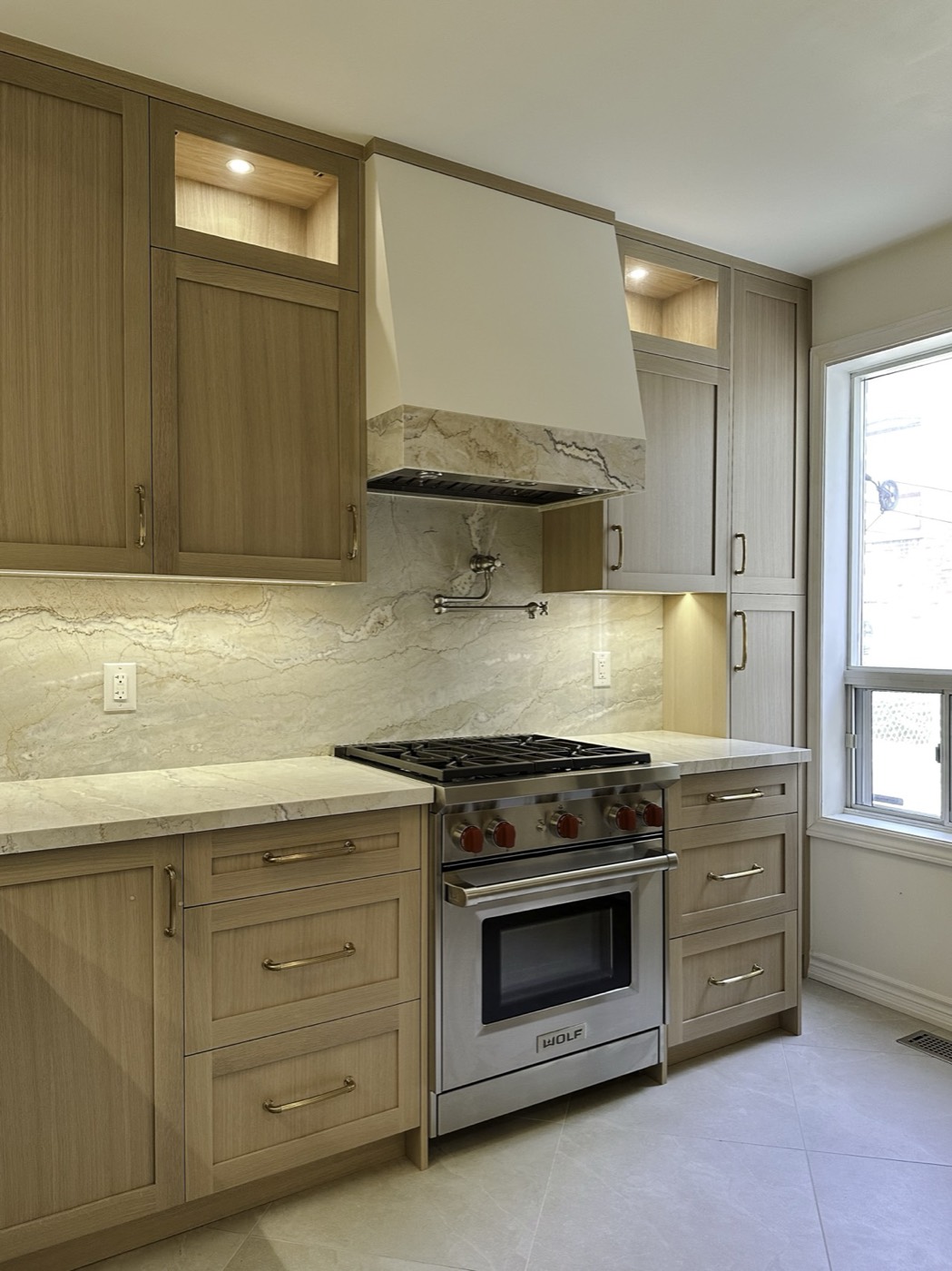
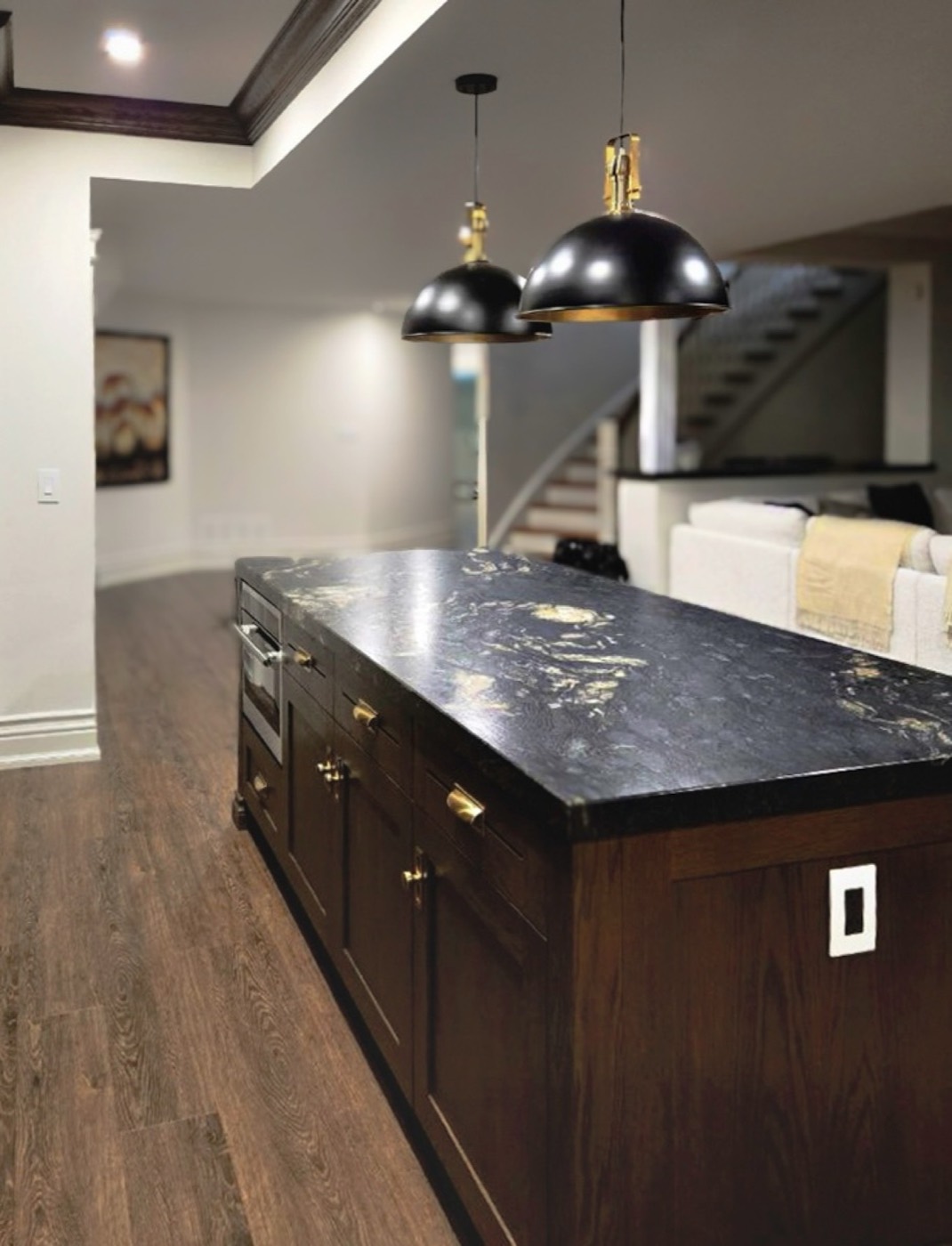
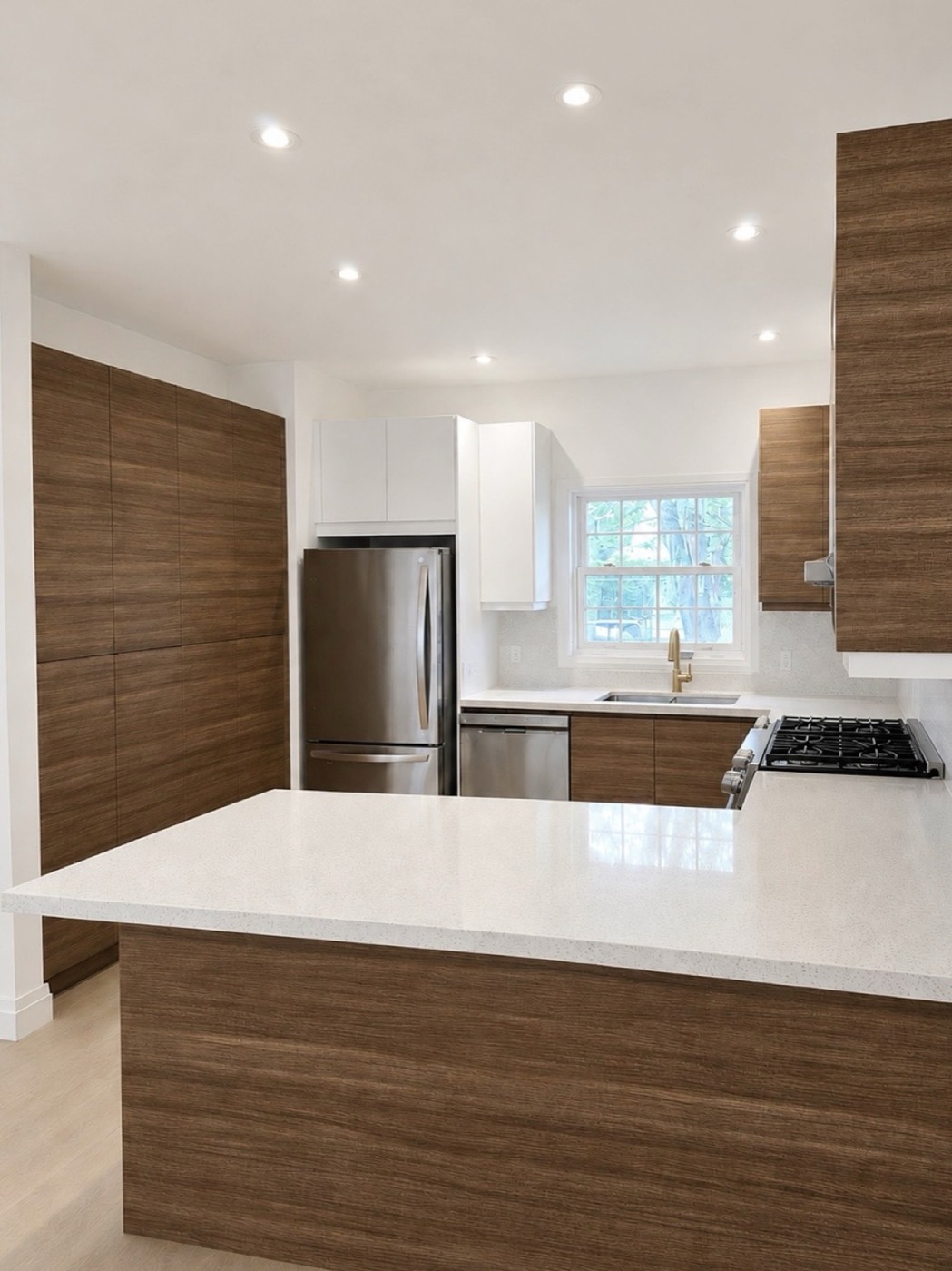
At Panda Reno, that means your cabinetry is drawn, milled and finished in our own shop and installed by the same team. It also means details that are difficult or impossible with standard boxes: panel-ready appliances that disappear into the run, full-height pantry walls like our Pure Oak Kitchen, continuous grain across drawer fronts, or an island built like a piece of furniture.
Fillers, gaps and the 3-inch problem
Because stock and most semi-custom cabinets come in fixed increments, there is almost always leftover space at the end of a run. That gap is covered with a filler strip. A few fillers are normal; a kitchen full of them is lost storage and a giveaway that the cabinets were not made for the room.
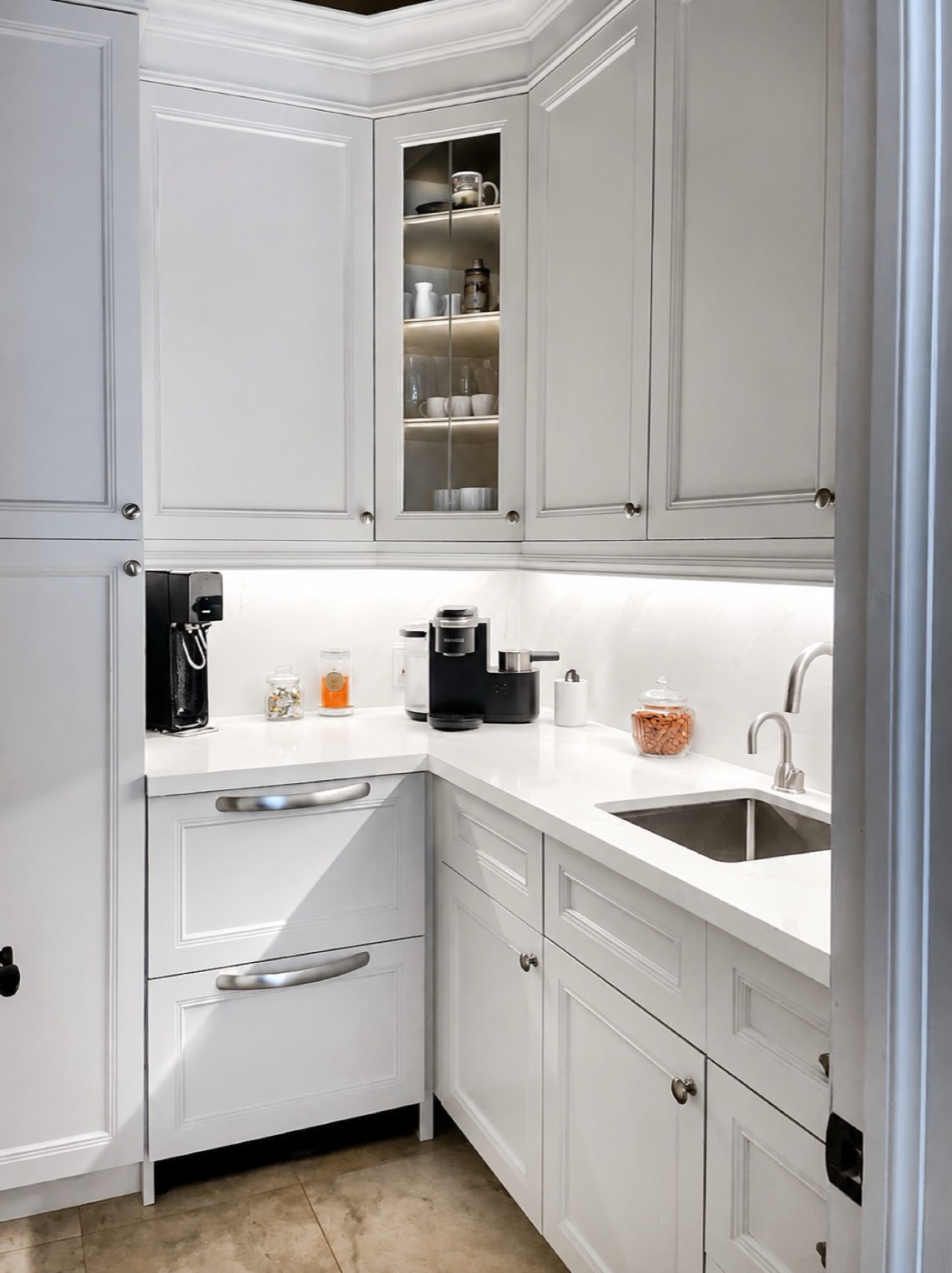
Corners are where this matters most. Standard blind-corner boxes leave hard-to-reach space, while custom corners can be designed around the exact geometry with full-depth drawers, angled units or purpose-built pull-outs. In a compact GTA kitchen, recovering that space can be the difference between needing an extra cabinet and not.
What is inside the box
Two cabinets can look identical from the front and be built very differently. The things that determine how a cabinet ages are mostly hidden: the box material, how it is joined, the drawer construction and the hardware.
Box materials range from particleboard to furniture-grade plywood and MDF. Each has its place, and our guide to solid wood vs MDF cabinets explains where each performs best. Drawer boxes range from stapled particleboard to dovetailed solid wood. Hinges and drawer runners range from basic to full-extension, soft-close systems rated for decades of daily use. Finishes range from printed laminate to multi-coat sprayed lacquer.
When you compare quotes, compare these specifications, not just the door sample on the counter.
Lead times compared
Stock cabinets can often be picked up within days if they are in stock, or delivered in a few weeks. Semi-custom lead times vary widely by manufacturer, commonly four to ten weeks. Fully custom cabinetry takes longer because it is made to order: most of our kitchens run eight to twelve weeks from approved drawings to installation. Our kitchen timeline guide breaks down each stage.
Cost: where the money goes
Custom costs more upfront than stock, and usually more than semi-custom. What you are paying for is design time, the labour to build each piece to order, better materials and finishes, and installation that fits the room rather than fights it.
The gap narrows in rooms that are complicated, where semi-custom lines charge for every modification, and it often reverses over the life of the kitchen, because well-built custom cabinetry is repaired and adjusted rather than replaced. For typical price ranges, see our guide to what custom kitchen cabinets cost in the GTA.
How to tell if a "custom" quote is really custom
If you are comparing quotes, these questions will quickly tell you what you are being offered:
- Where are the cabinets built, and can I see the shop?
- Can you make a cabinet any width I need, or only in set increments?
- What are the boxes and drawer boxes made of, and how are they joined?
- What hinges and drawer runners do you use?
- Is the finish sprayed, and how many coats?
- Who installs, and are they the same people who built the cabinets?
- Will I receive detailed drawings to approve before production?
Which should you choose?
Choose stock if the space is temporary, a rental or a utility area, and the budget is the priority. Choose semi-custom if the room is standard in shape, you want more finish options, and you are comfortable working within a manufacturer's sizes.
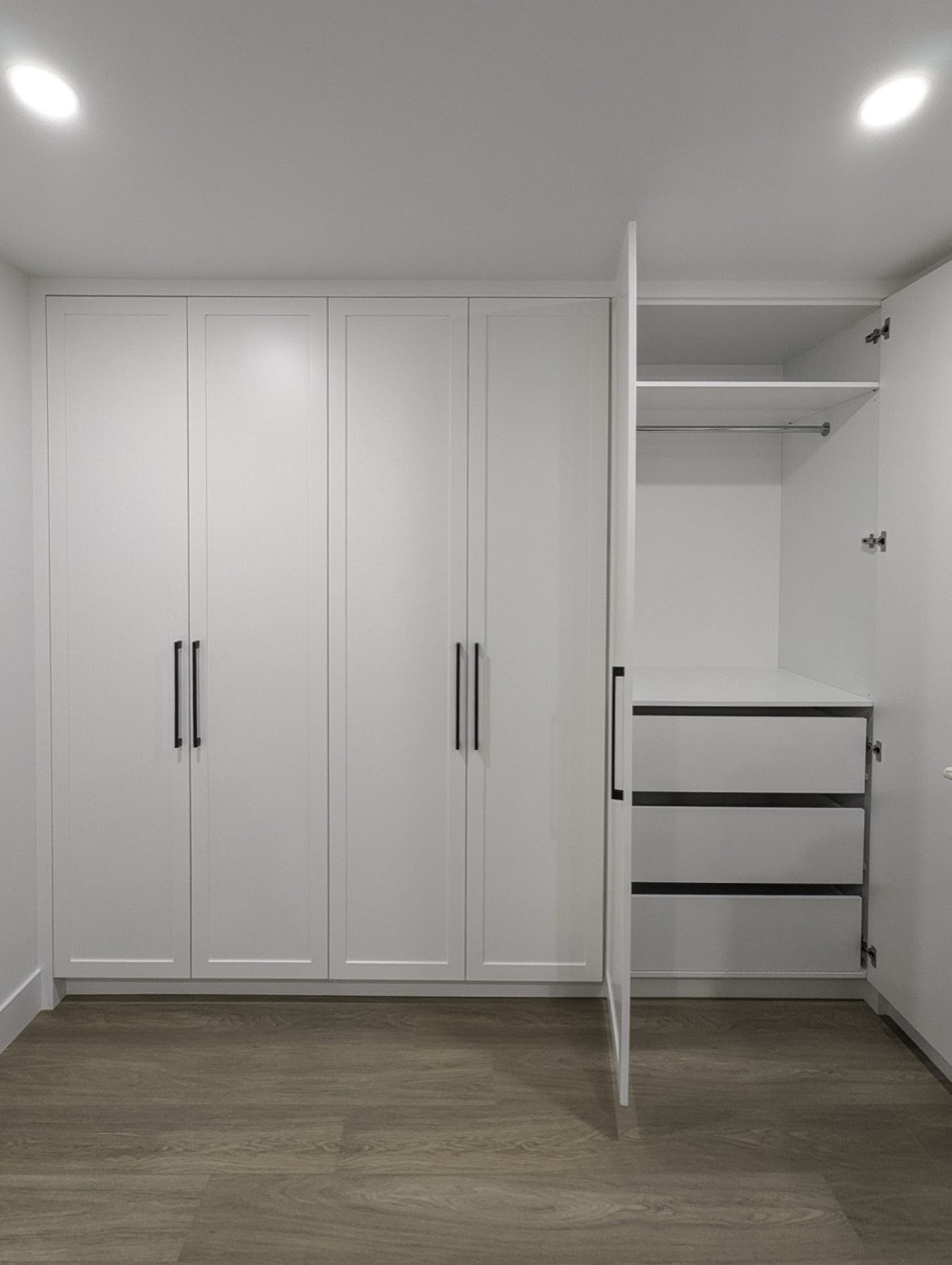
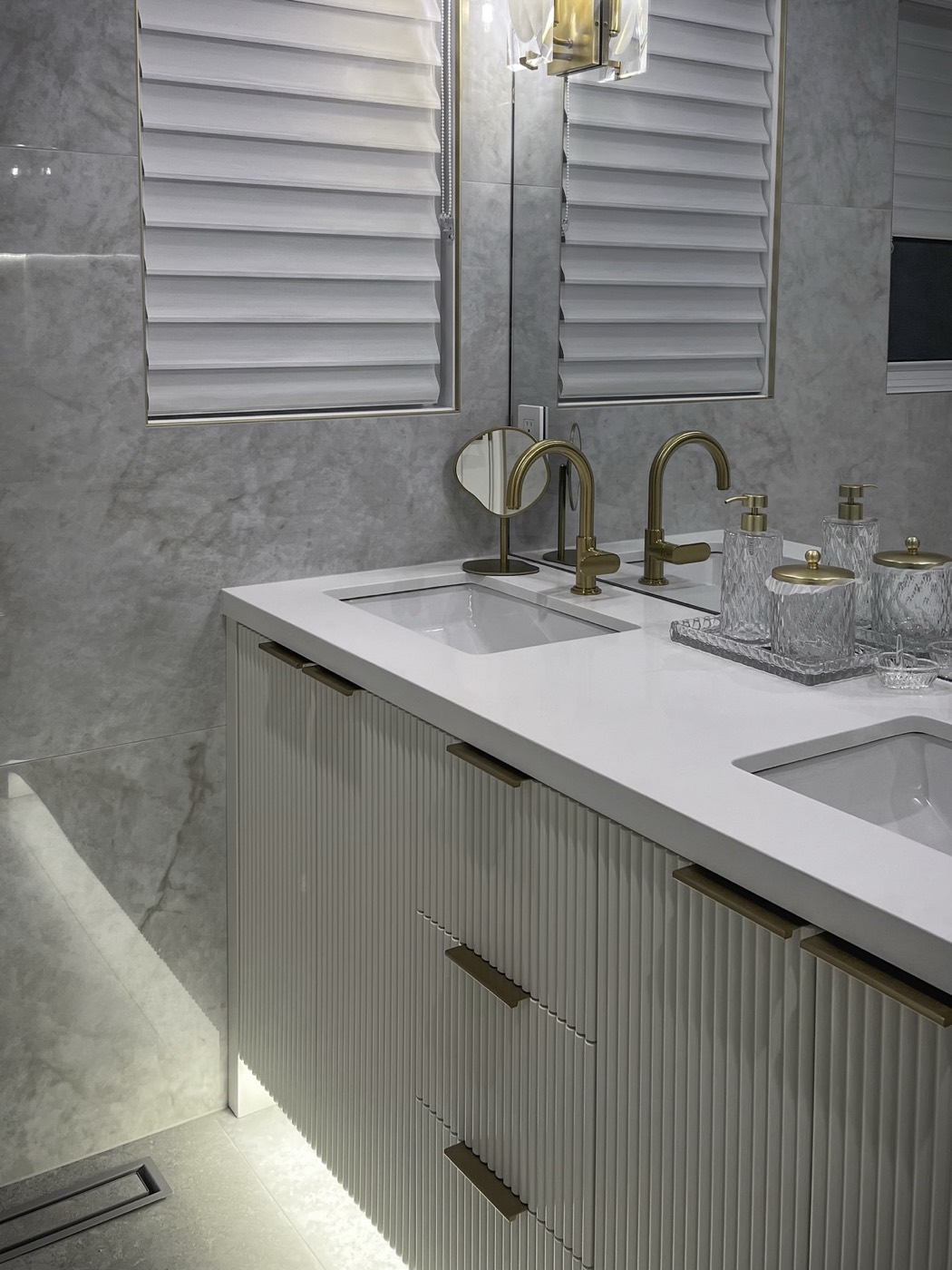
Choose fully custom if you plan to stay in the home for years, the room has awkward dimensions, as many older Toronto houses and condos do, you want integrated appliances or furniture-style detailing, or you simply want the cabinetry to be designed around the way you live. It also makes sense for bathroom vanities and laundry rooms where every inch counts.
Mixing tiers is perfectly reasonable, too. Plenty of homeowners invest in a custom kitchen and choose simpler cabinetry for the garage or basement storage.
The bottom line
The real difference between the three tiers is not the door you see in the showroom, it is how the cabinetry is sized, built and installed. If you would like to see what custom looks like in practice, browse our custom kitchens, vanities and laundry rooms, or book a free consultation and we will give you an honest view of what your project needs.
Related pages
Thinking about a project?
Let’s turn the idea into cabinetry.
Book a free consultation and we’ll talk through what’s possible for your space across the GTA.