
Designing a Walk-In Closet You'll Actually Use
A walk-in is only as good as the plan behind it. A practical guide to hanging, drawers, lighting and the mistakes worth avoiding.
Written by the Panda Reno design and workshop team: custom cabinet makers designing, building and installing across the Greater Toronto Area.
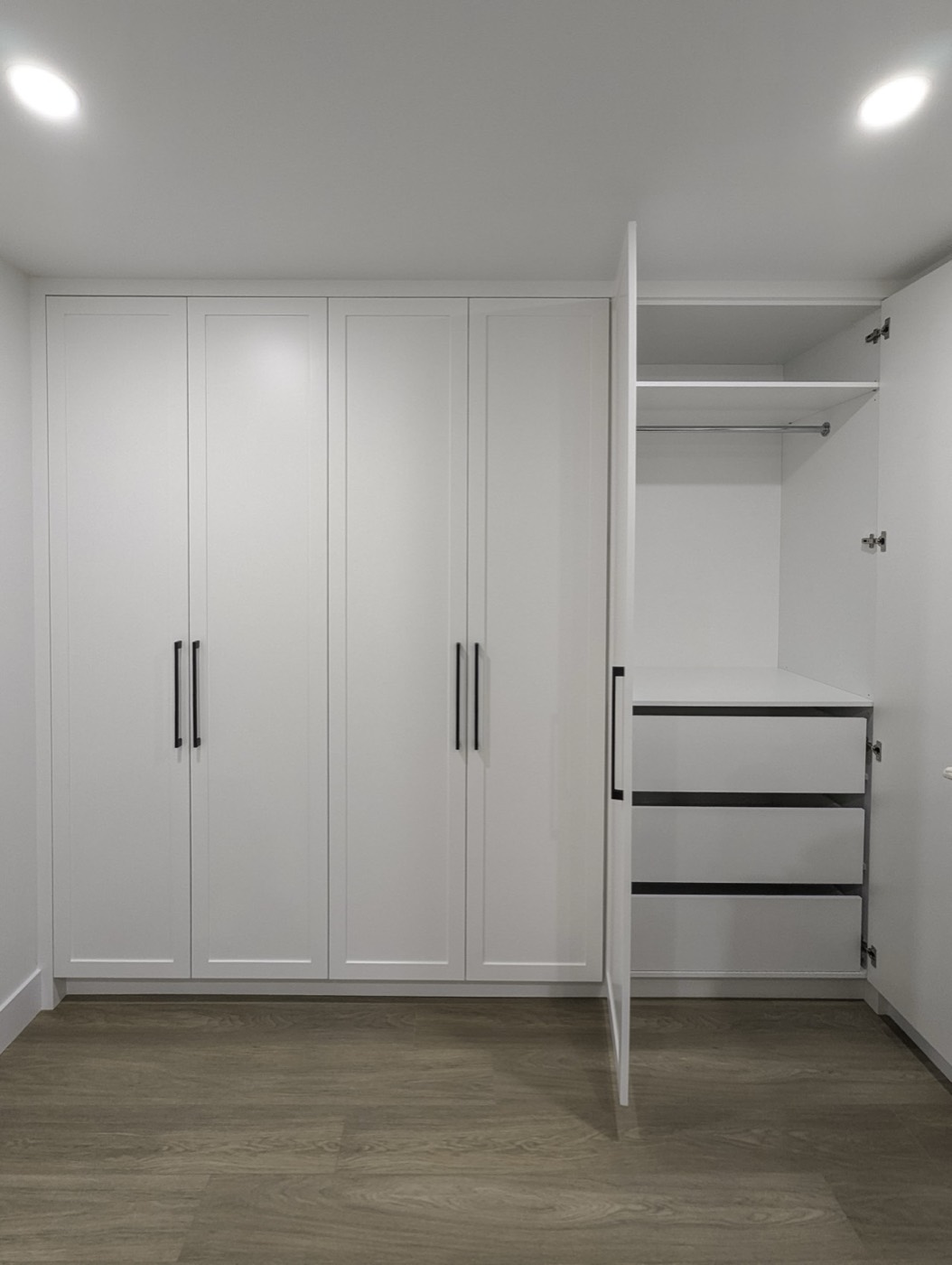
A beautiful closet that doesn't fit your wardrobe is just expensive shelving. The best walk-ins start with an honest inventory and end with a plan that puts every garment where you'll actually reach for it.
Inventory your wardrobe first
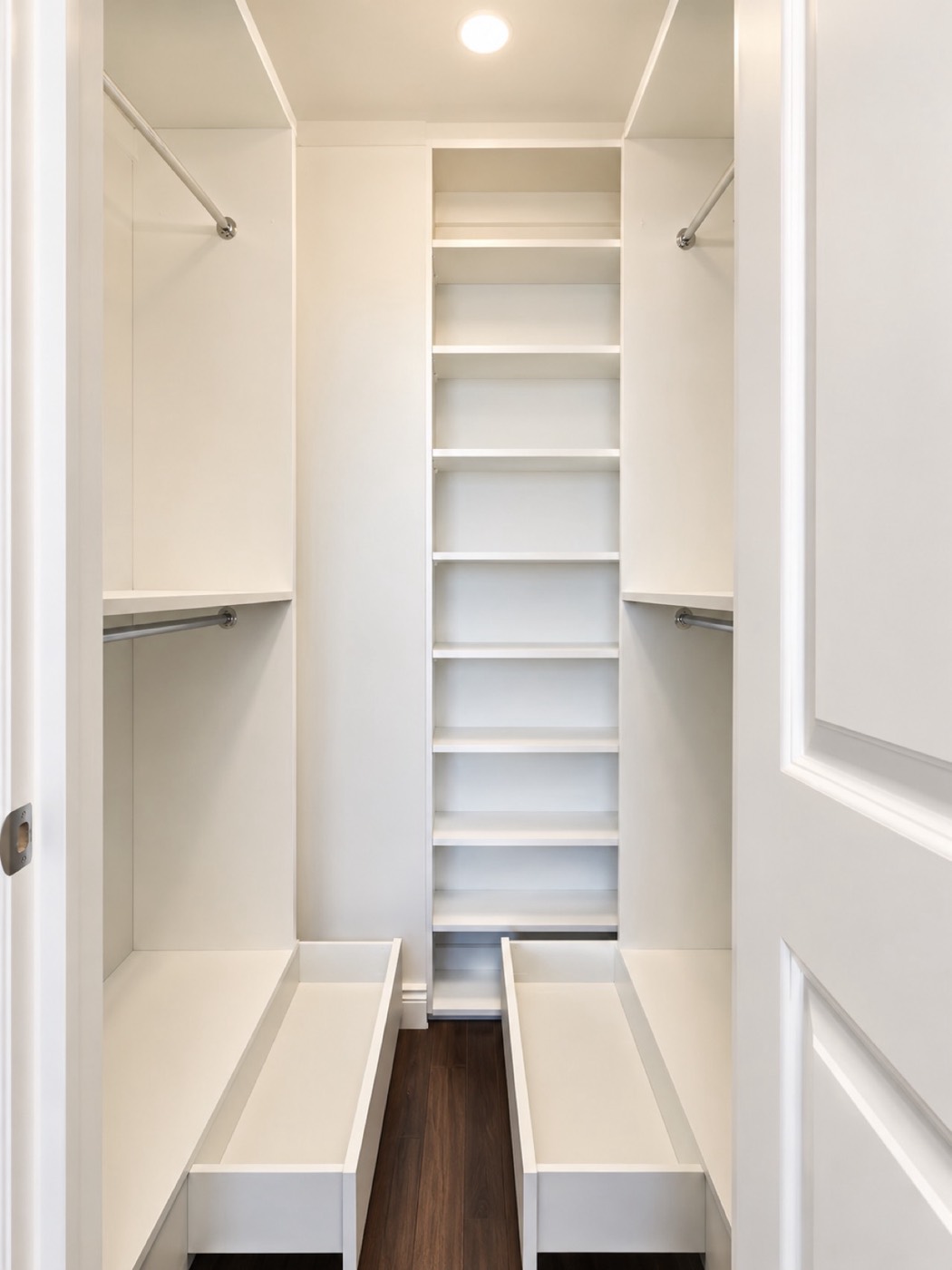
Before we design, we map what you own: how much hangs long, how much hangs double, how many drawers of folded items, how many pairs of shoes. Those numbers — not a stock layout — decide the mix of hanging, shelving and drawers.
Hanging, shelves and drawers
Most wardrobes need more double-hang than people expect and fewer long-hang sections than they plan for. Deep, soft-close drawers earn their keep for folded items and accessories, and adjustable shelving keeps the closet flexible as your needs change.
Lighting and finishes
Integrated LED — in the hanging sections, over the drawers, even inside them — turns getting dressed into something that feels considered. Finishes should be calm and easy to keep clean; the clothes are the colour, the cabinetry is the frame.
Common mistakes to avoid
Don't over-index on long-hang. Don't forget a full-length mirror and a spot to sit. Don't waste the corners. And don't skip the island or valet rail if the room can take it — a surface to lay things out is the difference between a closet and a dressing room.
How much space does a walk-in need?
Hanging clothes need about 24 inches of depth, and you need roughly 36 inches of clear aisle to move and dress comfortably. That gives some useful rules of thumb: hanging on one side needs a room around 5 feet wide; hanging on both sides needs about 7 feet. A U-shaped walk-in with a centre island needs roughly 12 feet or more across, once you allow for an island and an aisle on each side.
If the space is tighter than that, a walk-in may not be the best answer. A built-in wardrobe wall in the bedroom can hold more, cost less and feel less cramped. Our guide to custom closets vs modular systems covers the options.
Dimensions worth knowing
These are the starting points we use before adjusting to a client's wardrobe and height:
- Hanging depth: about 24 inches
- Double-hang: rods at roughly 40 and 80 inches from the floor
- Long-hang for dresses and coats: about 60 to 70 inches of clear drop
- Shoe shelves: about 12 to 14 inches deep, flat or angled
- Folded-item shelves: about 12 to 16 inches deep, spaced 10 to 12 inches apart
- Drawers: 14 to 22 inches deep, with shallow, divided drawers for accessories
Open, glass or closed?
Open shelving and hanging feel boutique and make it easy to see everything, but they collect dust and expose clothes to light. Glass doors keep dust out while showing off bags and shoes. Solid doors give the calmest look and suit closets that share a room with a bed. Many of our walk-ins mix all three: open hanging for everyday clothes, glass for display, and closed storage for everything else.
Light, sun and ventilation
Good lighting changes how a closet works. Integrated LED in the hanging sections, motion-activated strips inside drawers and a well-lit mirror make getting dressed easier at any hour. Natural light is lovely, but direct sun fades fabrics, so a window in a walk-in usually needs blinds or a UV-filtering film. Closets also need some air movement, especially if they back onto a bathroom.
Shoes, bags and accessories
Shoe storage is where most closets run out of space. Measure the collection, including boots, and plan for growth. Bags keep their shape best on open shelves or behind glass. Jewellery, watches and ties are happiest in shallow, velvet-lined or divided drawers, often in an island. A valet rod for tomorrow's outfit, a hamper pull-out and a small seat are small additions that get used every day.
What a custom walk-in costs
As a 2026 guide for the GTA, a custom reach-in closet typically runs about $3,000 to $6,000, a built-in wardrobe wall about $6,000 to $12,000, a small walk-in about $8,000 to $15,000, and a large walk-in dressing room $15,000 to $35,000 or more, depending on size, finish and specialty storage. Our Walk-In Closets & Wardrobes project gallery shows the range, from floor-to-ceiling wardrobe walls to open boutique dressing rooms. For a figure for your own space, see our custom closets page or book a free consultation.
Related pages
Thinking about a project?
Let’s turn the idea into cabinetry.
Book a free consultation and we’ll talk through what’s possible for your space across the GTA.