
Rift White Oak vs. Walnut: Choosing Your Cabinetry Wood
Two of the most requested woods in our shop, side by side — grain, tone, durability and the rooms each one suits best.
Written by the Panda Reno design and workshop team: custom cabinet makers designing, building and installing across the Greater Toronto Area.
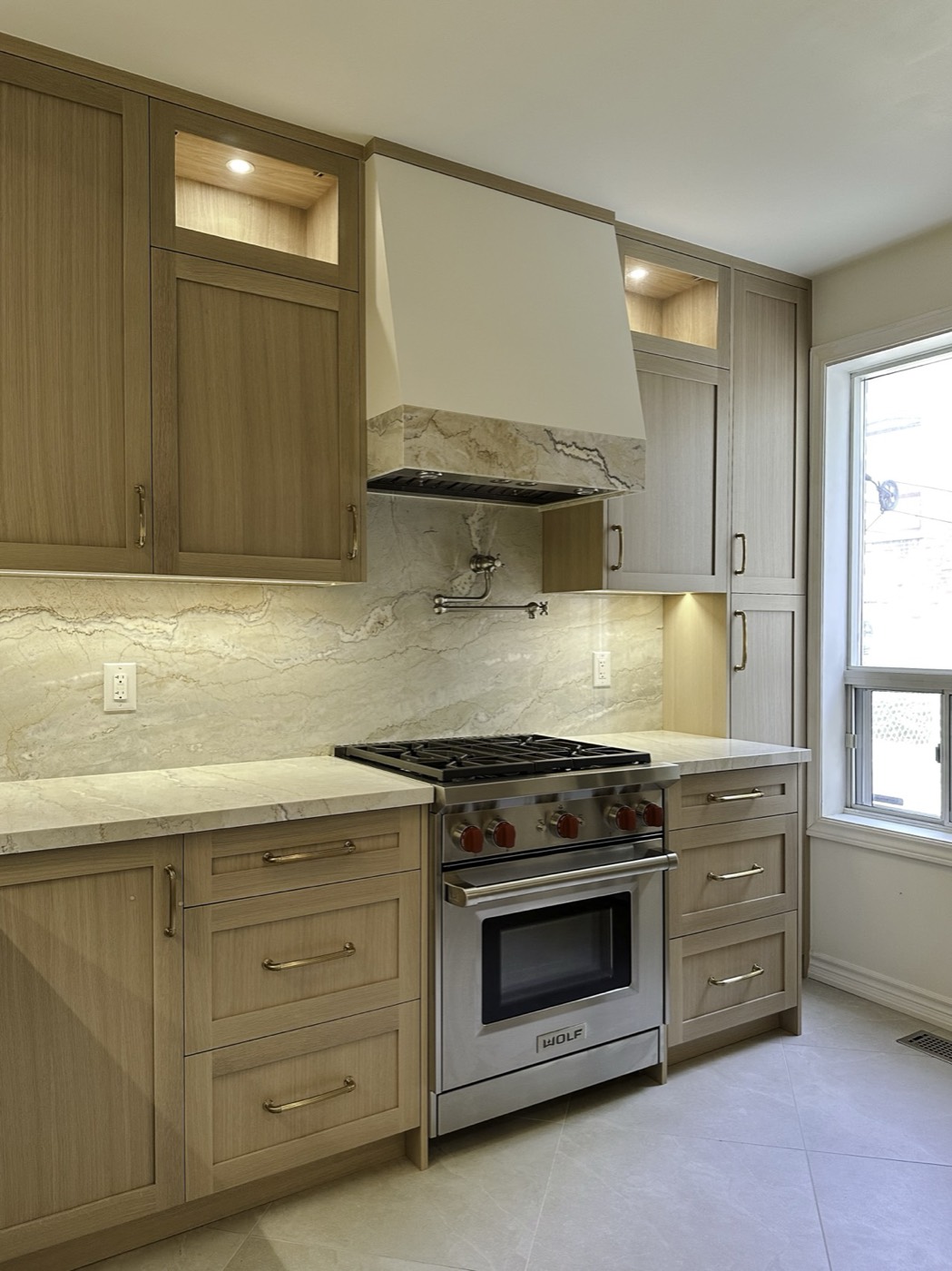
Wood is the single biggest driver of how a kitchen or built-in feels. Two species come up again and again in our shop — rift-cut white oak and walnut. Both are beautiful and durable; they simply tell different stories.
Rift white oak
Rift-cut white oak gives you a straight, quiet grain with very little of the cathedral figure you see in plain-sawn boards. The result is calm and contemporary, and it takes a natural or light finish beautifully — think warm, airy, Scandinavian-leaning rooms.
It's hard, stable and forgiving in daily use, which makes it a favourite for kitchens that want warmth without going dark.
Walnut
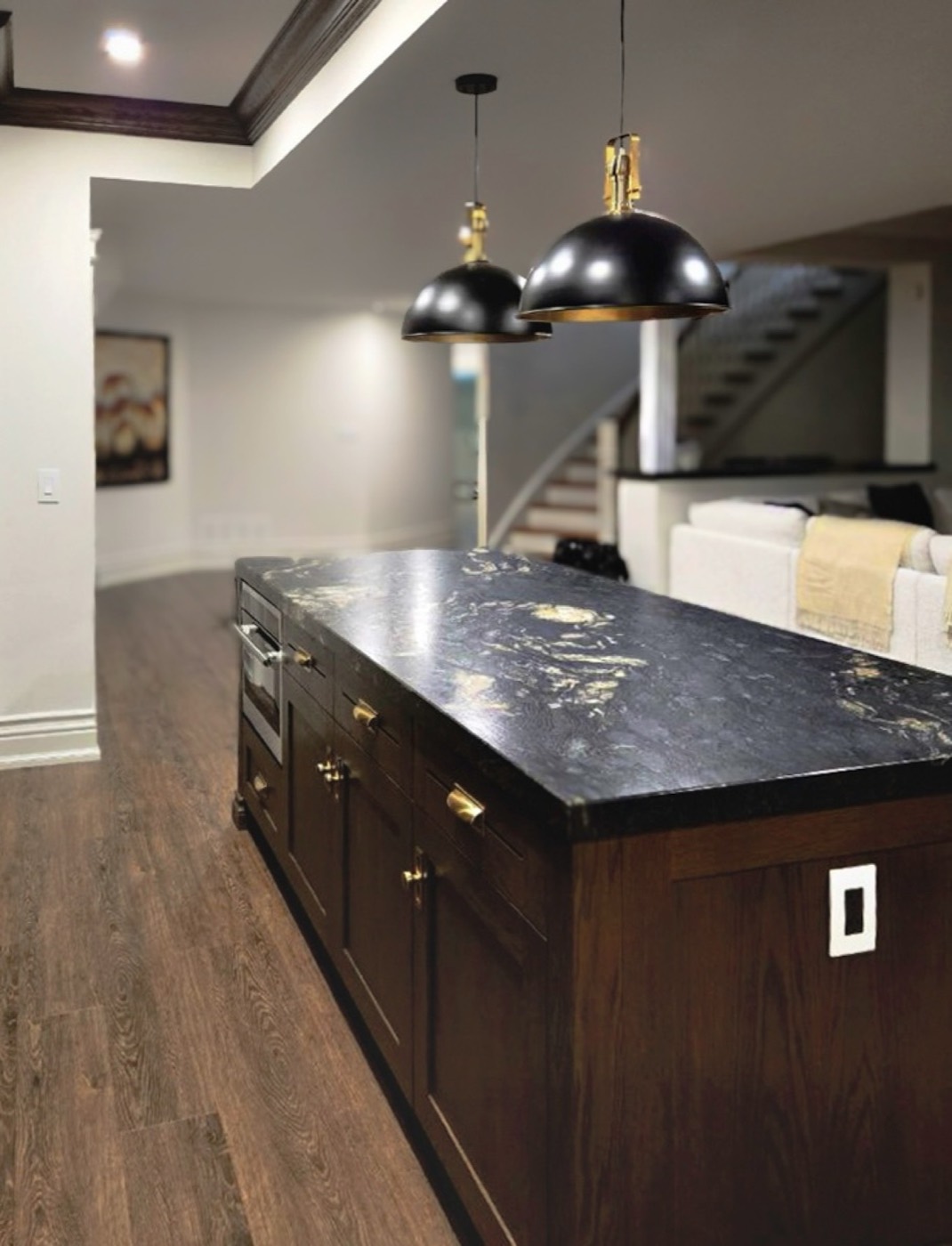
Walnut is richer, darker and more dramatic, with a flowing grain and chocolate tones that bring instant depth. It suits bars, libraries, offices and statement islands — spaces where you want gravity and warmth.
It's slightly softer than oak but still more than durable enough for cabinetry, and it only gets better as it ages and mellows.
Natural, stained or painted?
Both woods can be left natural under a protective hardwax oil, or stained to shift their tone. For a painted look, we generally move to a tight-grain panel — paint hides the very grain that makes oak and walnut worth choosing.
How to decide
Choose rift white oak when you want light, calm and contemporary. Choose walnut when you want rich, grounded and dramatic. And when you can't choose, we often use both — oak for the perimeter, walnut for the island or bar — so each does what it does best.
Side by side
A quick comparison of the two woods for cabinetry:
| Rift white oak | Walnut | |
|---|---|---|
| Colour | Pale, warm beige to light honey | Chocolate to purple-brown, with lighter sapwood |
| Grain | Straight, linear, very consistent | Flowing, varied, often dramatic |
| Hardness (Janka) | About 1,360 lbf | About 1,010 lbf |
| How it ages | Warms slightly over time | Lightens and turns warmer, more golden |
| Look | Calm, Scandinavian, contemporary | Rich, mid-century, traditional |
| Best for | Kitchens, vanities, light-filled rooms | Bars, libraries, islands, feature walls |
How each wood ages
Wood changes colour with light, and the two species move in different directions. White oak warms gently over the years, so a very pale finish becomes a little more golden. Walnut does the opposite of what many people expect: it lightens and becomes warmer and more honeyed as it is exposed to sunlight.
Neither change is a defect, but it is worth planning for. In a sunny room, avoid leaving objects in the same spot on new walnut for months, or you may see a lighter outline around them. Under-cabinet lighting does not cause this; daylight does.
Solid wood or veneer?
For large panels such as tall doors, end panels and island fronts, we usually use quality wood veneer over a stable core. It gives you real oak or walnut on the surface, allows grain to be matched across a whole run, and resists the seasonal movement that can make large solid panels cup or crack. Solid wood is used where it performs best: frames, edges, trim and pieces that take wear. Our guide to solid wood vs MDF explains the trade-offs in more detail.
Pairing with stone, metal and paint
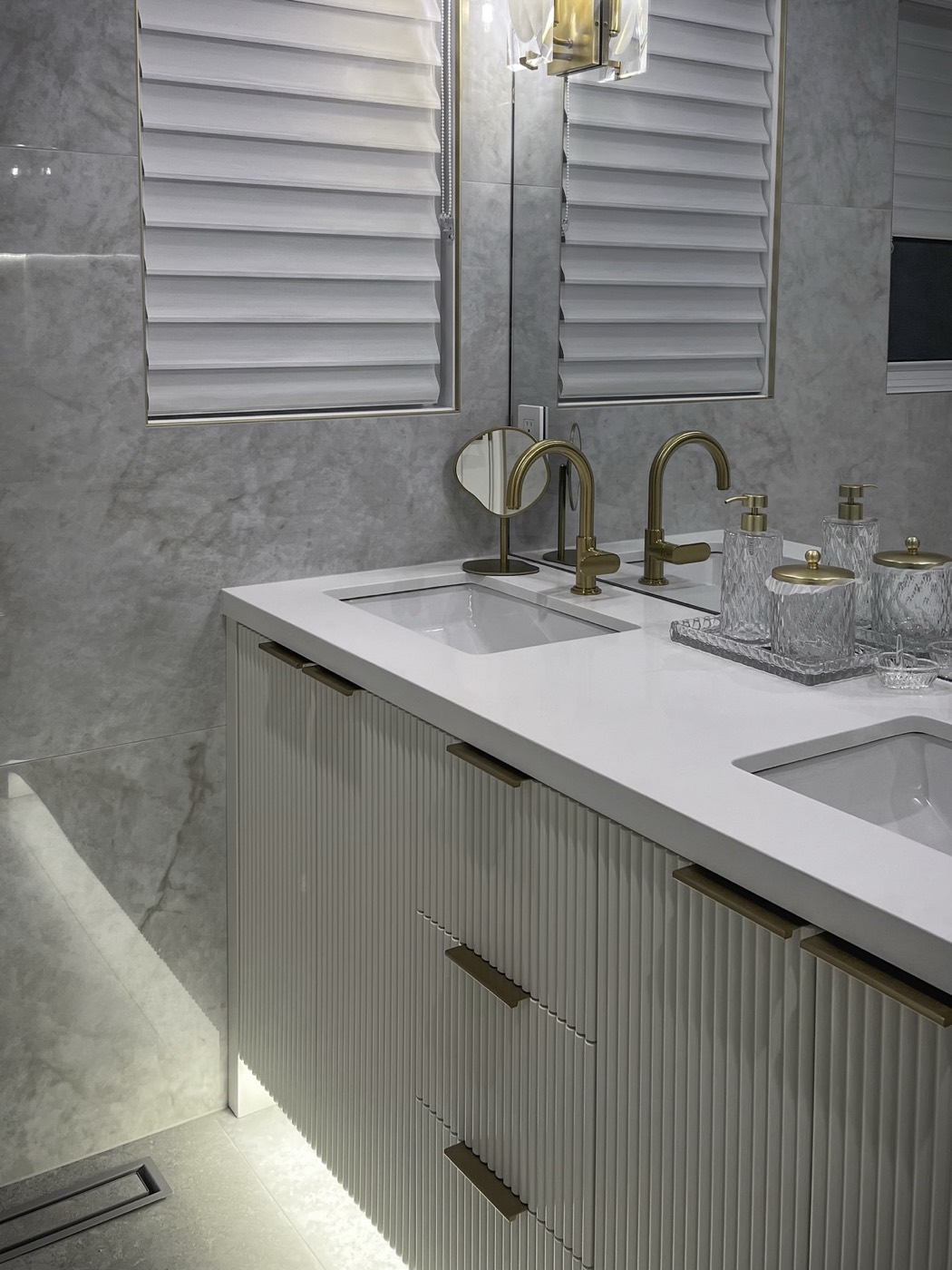
Rift white oak pairs naturally with white or light marble, warm white walls, unlacquered or brushed brass and soft greige paint. It is the backbone of the calm, light kitchens many Toronto homeowners ask for.
Walnut is at its best against contrast: dark or veined stone, black and gold, blackened metal and deep painted colours. It also sits beautifully beside a painted perimeter as a furniture-like island or bar.
Where we have used each
Our Rift White Oak Kitchen in Toronto shows rift oak at its best: continuous grain across doors and drawer fronts, lit glass-front uppers and a natural matte hardwax oil finish. For walnut, the Custom Wet & Dry Bars collection includes a richly stained walnut bar with dramatic black-and-gold stone, the kind of space where walnut's depth really shines.
Care and maintenance
Both woods are easy to live with under a quality finish. Wipe spills promptly with a damp cloth, avoid harsh or abrasive cleaners, and keep standing water off edges near sinks. Hardwax-oiled finishes can be refreshed in place with a maintenance oil every few years, which is one of their big advantages: small marks can be repaired locally rather than refinishing an entire door.
Sources & further reading
Rules and requirements change; always confirm the specifics for your project with your municipality and licensed trades.
Related pages
Thinking about a project?
Let’s turn the idea into cabinetry.
Book a free consultation and we’ll talk through what’s possible for your space across the GTA.